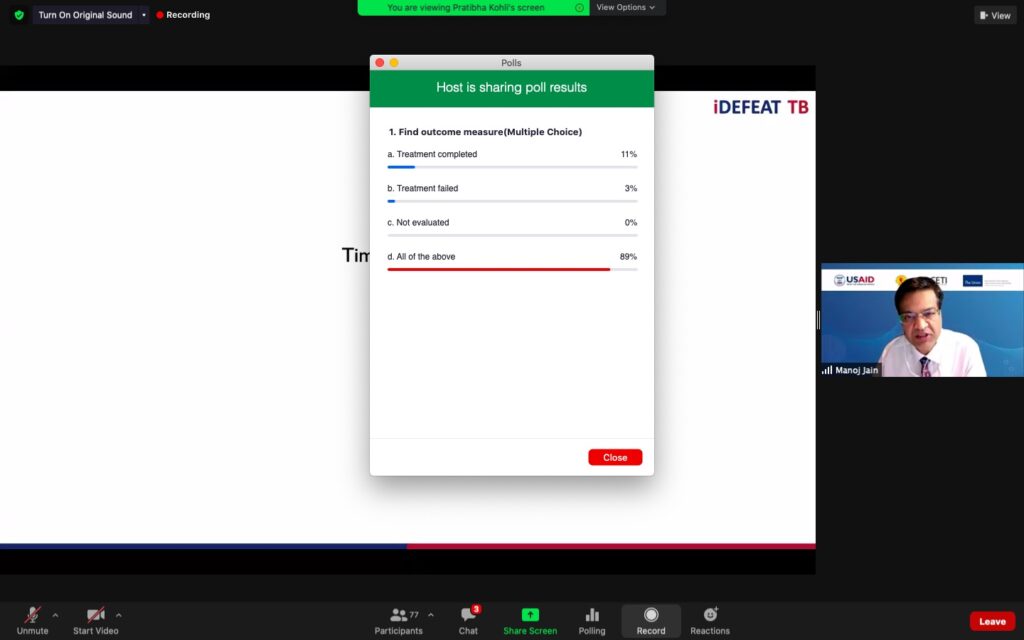
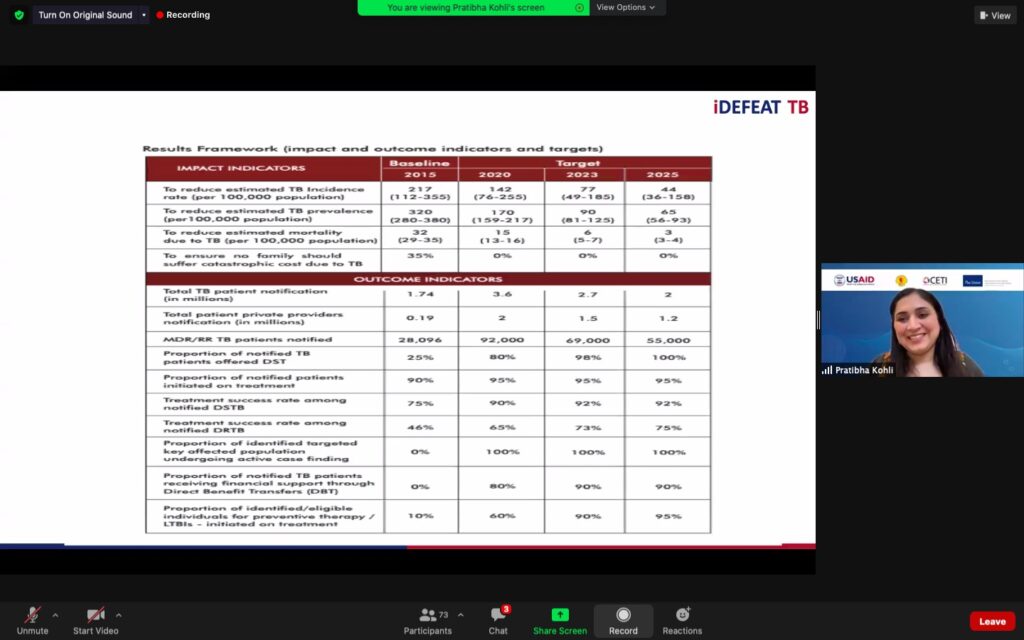
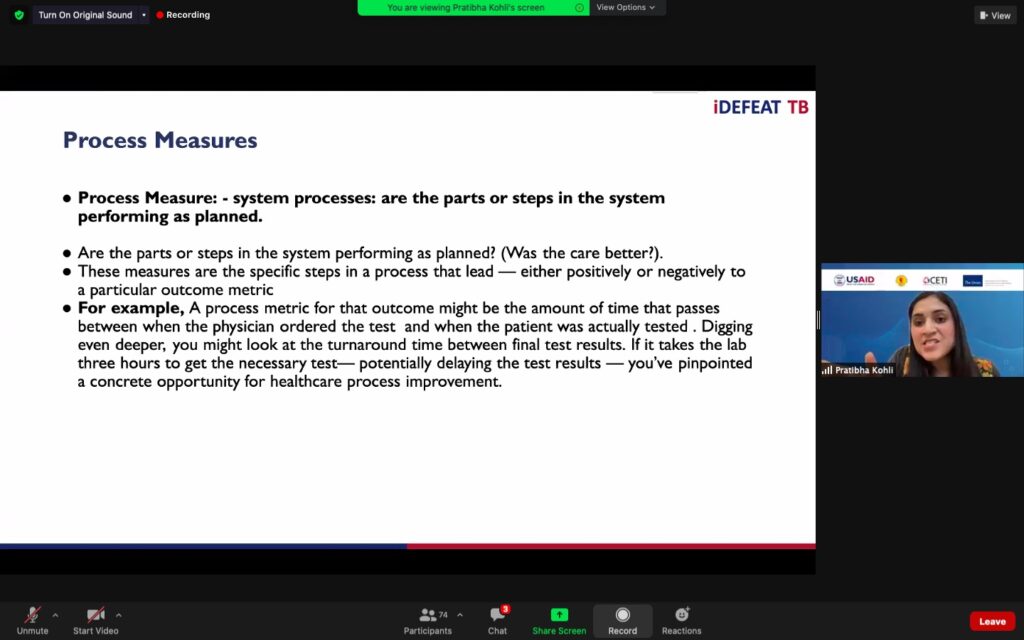
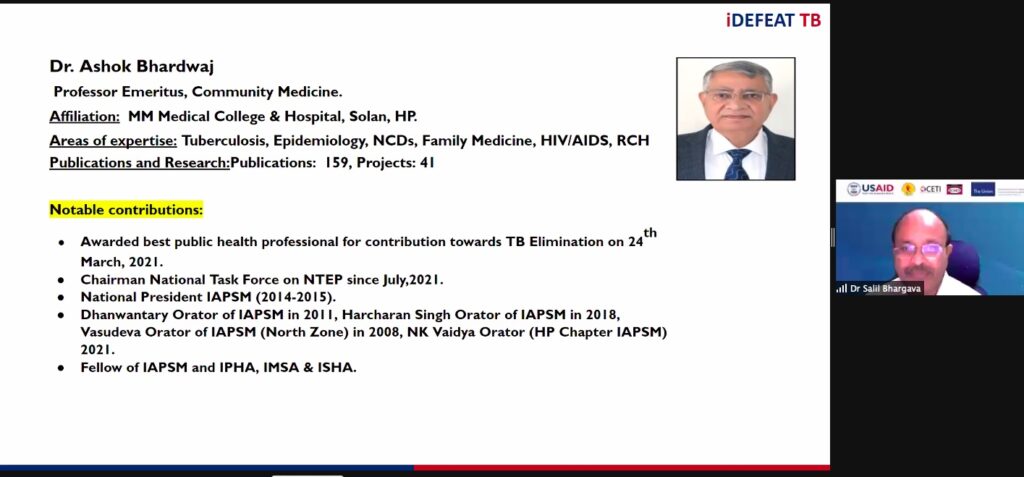
The session kicked off with the speaker making remarks about how the aim of the course is not to increase the burden of work on DTOs but to reduce it by providing them necessary tools which helps them work smart over hard. It was then followed by a brief introduction to the guest speaker and the podium was then handed over to another speaker. Following this, the session shifted its focus towards the series of Quality Improvement (QI) lectures, first of which was ‘Identifying the problem’. Problem identification was explained by answering the first question of Institute for Healthcare Improvement’s (IHI) model of improvement i.e. “What is the problem?”. To answer this question the speaker defined the term ‘problem’ followed by the list of problems collated from previous batches on which one might want to improve. To this, the DTOs from the audience enthusiastically participated to share their daily life problems in the NTEP. The next step towards problem identification was to understand ‘How to identify a problem’. It was advised that while identifying a problem one should avoid poor selection of problem, lack of prioritization of problems as well as jumping to a solution before understanding the problem. This might turn quite disastrous and therefore scientific tools are essential to keep such disappointments at bay. Moving forward, the speaker introduced some helpful questions that one might ask to identify a problem and was illustrated in real time with the help of some examples posed by the DTOs from audience itself. Diverging the focus towards the processes that might be in need of improvement also helps in identifying the correct problem. This may be done through internal review, external review, collection of additional data according to need and brainstorming. In order to make the identification even more defined few problem identification establishing criteria were explained. A brief introduction of prioritization matrix followed next which lead to illustration of forming of an aim statement using an e-PDSA worksheet. Thus, the attention moved towards the formation of an aim statement. To make it more elaborate the speaker mentioned that the aim statement should be Specific, Measurable, Achievable, Relevant and Time bound (SMART).This was followed by techniques of ‘Measuring Improvement’ which mentioned PDSA as a loop for continuous quality improvement. The speaker defined the term ‘measure’ and explained that it may come into play before, during or after project. It was then explained that there could be three types of measures i.e., Impact, Process and Outcome measure which were further elaborated and demonstrated with examples. Finally, the speaker explained about how to choose a measure and the session concluded with a positive remark from the guest lecture of the evenings.